ServicesBusiness Valuation
Business Valuation in Liberty Hill
Before you sell, bring in a partner or plan an exit, you need a number you can defend. We recast your financials, compare them with real sales and walk you through each step so you can see exactly how the value was reached.
A value built from your records, not a rule of thumb
A business valuation tells you what a qualified buyer is likely to pay for your company today. Industry rules of thumb and a friend's sale price make poor guides. Two companies with the same revenue can be worth very different amounts once owner pay, one-time expenses and customer mix are accounted for.
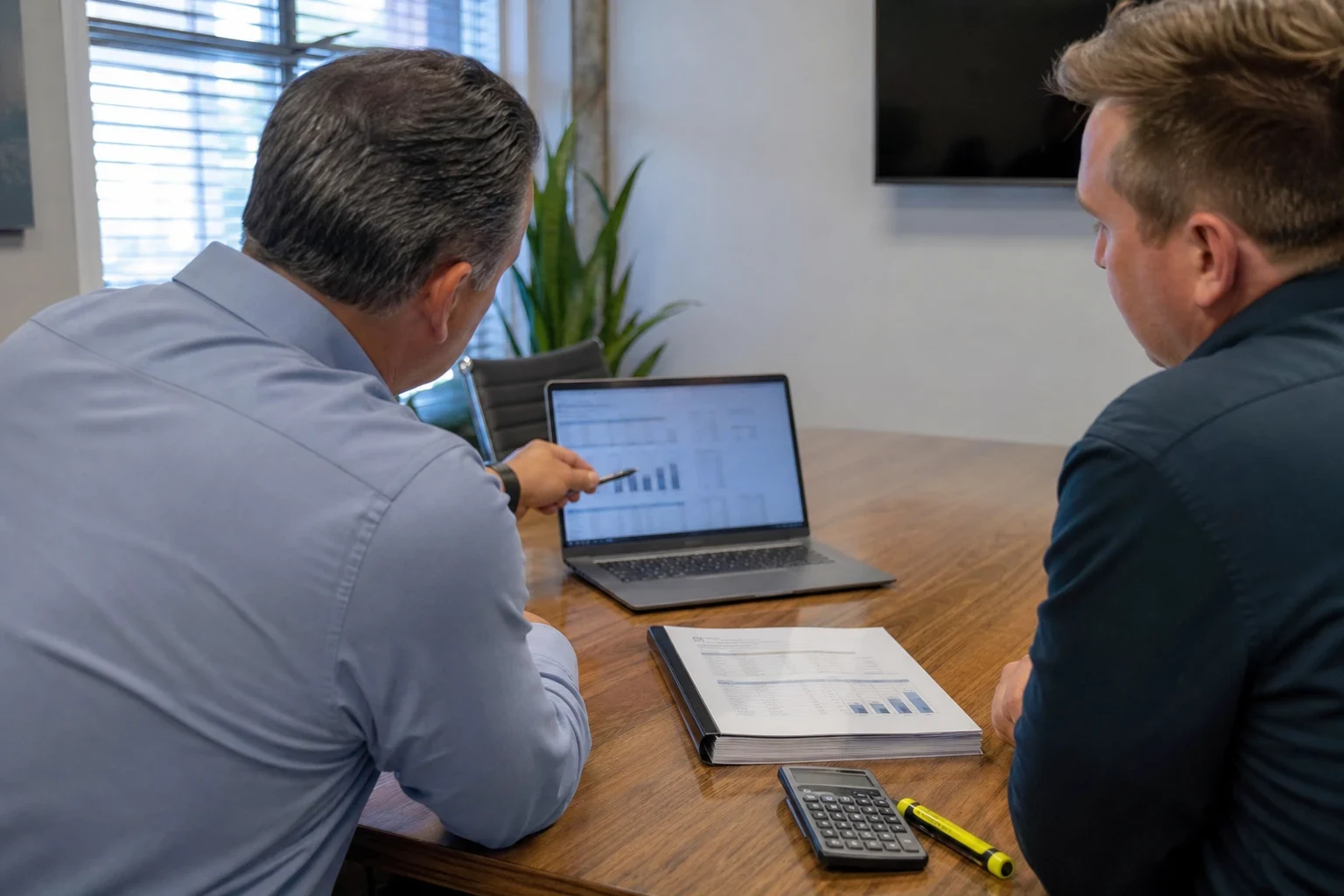
We start with your tax returns and profit and loss statements, then adjust them to show what the business truly earns for an owner. Those earnings are measured against comparable sales and the assets you own. You get a written report that keeps a record of what we found at each stage, so nothing in the final figure is a mystery.
It is the right call when you are thinking about selling in the next few years, weighing a partner buyout, or simply want to know where you stand. Free, confidential valuations are one of the ways we start most conversations.
What your valuation includes
- Recast financial statements
- We rebuild three years of earnings to show seller's discretionary earnings or adjusted EBITDA. Each add-back, such as owner salary, personal vehicle costs or a one-time legal bill, is listed on its own line with the reason it was added.
- Comparable sales review
- We look at what similar businesses in your industry and size range have actually sold for. You see which sales we used and why they fit.
- Asset and inventory review
- Equipment, fixtures and inventory are noted and weighed against how buyers treat them. Owned real estate is valued separately so it does not blur the business number.
- Risk and strength notes
- We point out what lifts value, like recurring contracts or a trained manager, and what holds it back. Each note comes with a plain explanation of how a buyer would read it.
- A walkthrough meeting
- We go through the report with you at our office or by phone and video. You can question any line and we will show the source behind it.
Signs it is time for a valuation
You are thinking about an exit
Even a sale three or four years out benefits from a starting number. It shows what to improve before buyers ever look.
A buyer has approached you
An unsolicited offer is hard to judge without a baseline. A valuation tells you whether it is fair, low or worth a closer conversation.
Partners see the value differently
When one partner wants out, a documented value gives both sides the same facts to work from. It pairs naturally with our partner buyouts and succession work.
Your books mix personal and business costs
Many owners run legitimate personal expenses through the company. Buyers will pay for those earnings only if they are clearly recast and supported.
Profits have changed sharply
A strong year or a rough one can distort how you see your company. We look at the trend so one year does not set the price.
What moves the value of your business
The valuation itself costs you nothing. What changes from one company to the next is the value, and a handful of factors carry most of the weight. Knowing them early gives you time to strengthen them.
Quality of earnings
Clean, consistent books that match your tax returns earn more buyer confidence. Unsupported cash income usually counts for little.
Owner dependence
If customers, suppliers and staff all rely on you personally, buyers see risk. A business that runs without the owner every day is worth more.
Customer concentration
When one or two customers make up a large share of sales, the multiple tends to drop. A broad, steady customer base supports a higher number.
Lease and location terms
A transferable lease with years remaining protects a buyer's investment. A short or uncertain lease can hold value back or complicate financing.
Growth trend and recurring revenue
Rising earnings and contract or subscription income point to a dependable future. Buyers pay for that predictability.
How the valuation works
- 1
A confidential first call
You tell us about the company, your goals and your timing. Nothing you share leaves our office, and no one at your business needs to know.
- 2
Gathering the records
We will ask for your filed returns from recent years, income statements for this year and last, a current snapshot of what the company owns and owes, and a rundown of your larger equipment. If a piece is missing, we explain which items matter now and which can come later.
- 3
Recasting and comparing
We adjust the earnings, test them against comparable sales and review your assets and lease. Each adjustment is documented as we go so you can follow the reasoning later.
- 4
Review and next steps
We present the report and the range it supports. From there you decide whether to sell, plan an exit or simply hold the number for later, with no obligation either way.

Business valuation questions
Will my employees or customers find out?
No. We work from your records at our office or by phone and video, and we never contact your staff, customers or suppliers during a valuation. Everything stays confidential between you and us.
Does a free valuation commit me to listing with you?
No. Many owners get a valuation and decide to wait, improve a few things or keep running the company. Should you decide to sell down the road, listing costs you nothing at the start, there are no retainers or hidden fees, and our fee comes only from a completed sale.
Is this the same as a formal appraisal?
Not exactly. Ours is a market-based opinion of value built for selling, buying or planning an exit. For a court case, estate filing or certain lender requirements, you may need a separate formal appraisal, and we will tell you plainly if your situation calls for one.
What records should I have ready?
The core set is your filed business tax returns for the last few years, an income statement covering this year alongside last year's, a current picture of assets and debts, and a note of the major equipment you own. A copy of your lease helps too. If your books are not tidy, reach out anyway and we will sort out what is needed.
What if I own the building as well?
We value the real estate separately from the business so each number stands on its own. If you plan to sell both together, our business and property sales service covers how that deal is usually structured.

Know what your business is worth
A short, confidential conversation is all it takes to get started. We will tell you what records to gather and what you can expect in the report.